The Parameters of Society
For a long while, I thought myself more in the libertarian camp than anything else. Before that, I was a fairly white bread conservative that styled himself on being a little bit edgy. At this point, I’m in a very post Neo-waking-up-outside-of-the-matrix, kind of reassessing the bounds of reality mental space. Now that all that has been said, I think every pocket of “how do we build a functional society” sort of political speak can function within their own parameters.
Back in January, Tom Luongo had a solo show with Crypto Rich:
In this show, he laid out the dichotomy of the “old world” vs the “new world”, which is the basis of pretty much all of the conflict the world has been experiencing in recent years. But what really stuck out to me was that Tom was going through how these 18th century powers set up the the markets to trade the goods that they were bringing in through colonization. However, in addition to raw goods, they also had to figure out how to price the currency - in this case silver. Because what good is a pound of cacao beans if you don’t have a fungible way to acquire them in exchange for something that you know how to produce? In this way, the old world set up the parameters of their society. They gave normal people the ability to participate in the industrial game in a way that directly benefitted them - even if it made someone else slightly richer.
Going back to my libertarian days, I had believed that people are very good at organizing themselves. And this still rings true to me. However, this perspective comes from a largely American point of view where the early settlers of the United States of America got along by working together - by setting very clear boundaries among themselves in order to make sure they could survive. In these conditions, you had no millionaires, but everybody lived well enough. This was the magic of the American frontier.
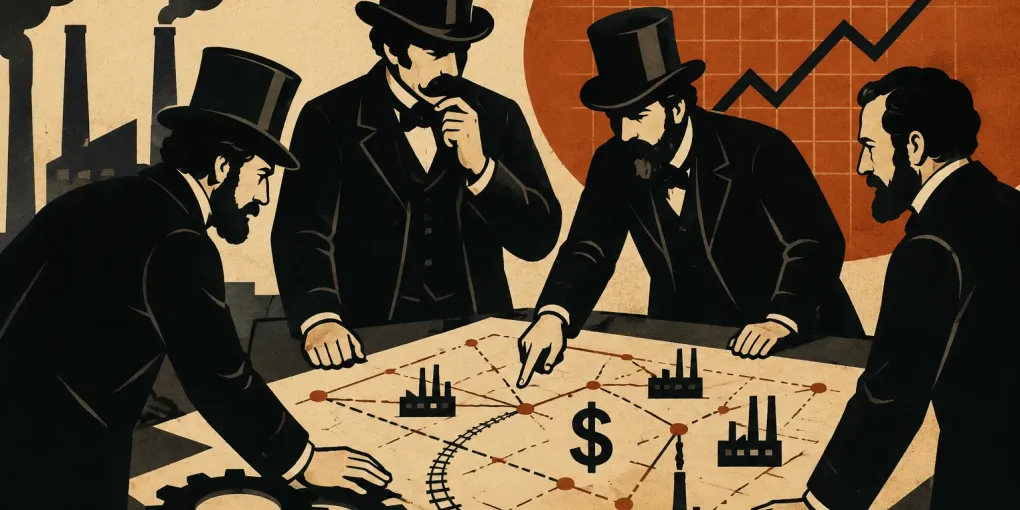
However, if you wanted to build a powerful economic force to rival the rest of the world and all of the already-existing empires therein, you had to strong arm people into cities and factories to produce machines, arms, etc. In these cities, you didn’t have the same demographics as the surrounding areas. The early industrialists didn’t have that luxury because, even though Americans weren’t necessarily rich in coin, they were rich in other ways and didn’t have to toil endlessly to put food on the table. As such, these tycoons had to take whatever labor that they could get their hands on, which naturally meant conflict was going to ensue. So they needed to make sure everybody knew what was allowed and what wasn’t - and that order had to be backed up by a centralized force. Kind of like an electric fence to keep a herd of cattle contained.
However, it wasn’t all sticks - there were some carrots, too. Every human being, regardless of culture, has an innate desire to build and raise a family so that they can pass on their genes. If you give people a way to do so relatively safely, they will behave in a way that benefits you as well. To most people, this is a reasonable trade.
Take the whole moral question out of it. Morality is the glue that holds society together, but that glue was poured by someone else. You won’t win by caging your mind within the parameters set for you. Once you understand the parameters of society, you can start to use that very nature to coax people into behaving in a predictable way. Once people become predictable or you can predict their behavior well enough, you can rely on them to gain what needs to be gained. And that doesn’t mean screwing people over. It means building something that can actually provide value to the world. We aren’t all cattle. Some of us aim to be ranchers.